When Blake and I decided to celebrate our anniversary in Washington’s San Juan Islands, we booked three days at a cottage tucked between a horse barn and the owners’ home. Pictures showed that cottage surrounded by gardens and pasture—and overlooking the Strait of Juan de Fuca. Needless to say, we expected it to be charming—and utterly romantic.
And oh, it was.
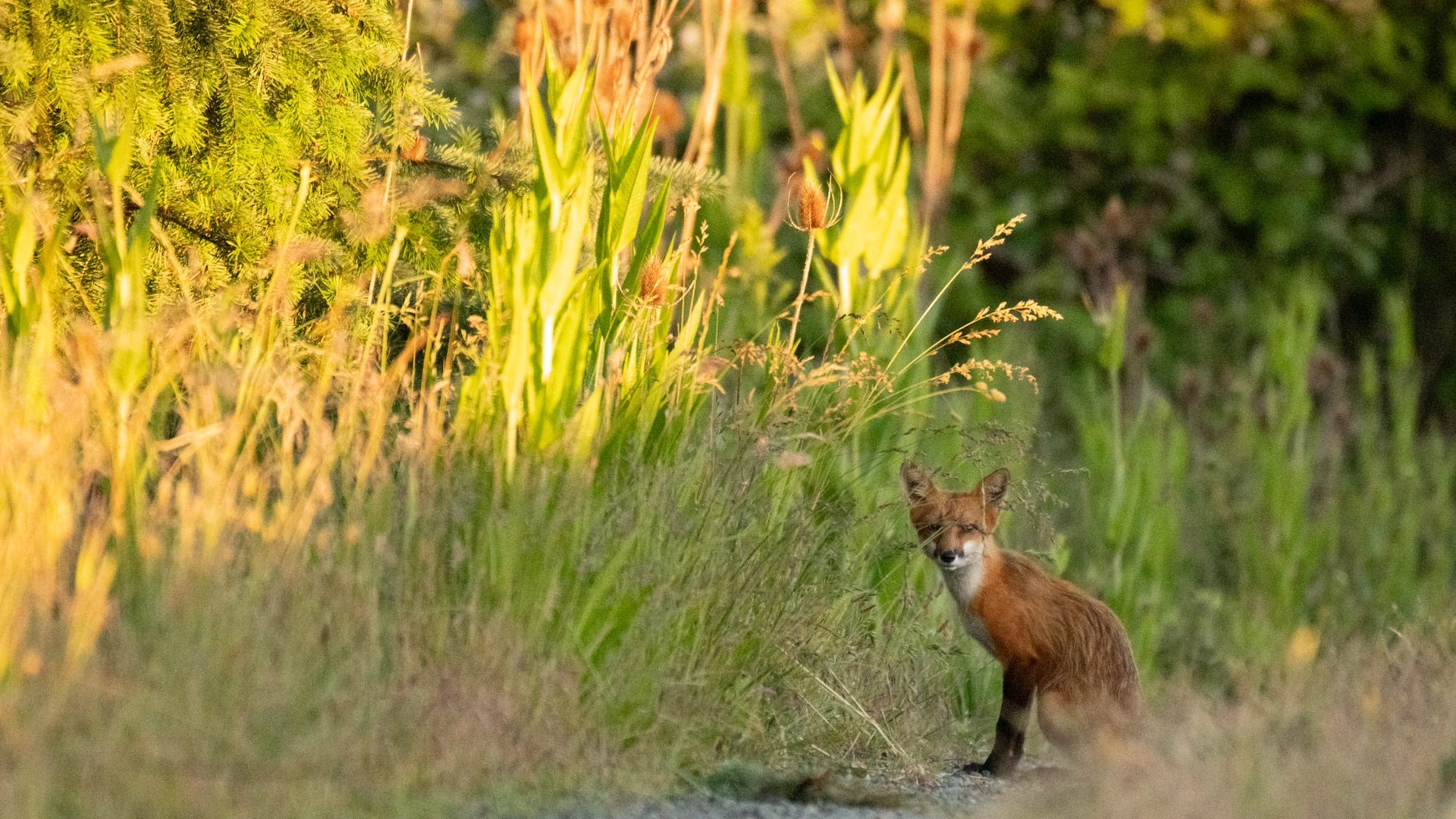
But the location was also walking distance from American Camp, Cattle Point, and a national park that’s home to wild foxes.
Which, since foxes are at the heart of my novel-in-progress, made this a romantic research trip. Tentatively titled All Her Wild Foxes, the story opens with my protagonist’s secretive flight from a 1919 Alaska fur farm—carrying a stolen pair of red fox kits. An unexpected detour lands her and the animals in Washington’s San Juan archipelago, on a small island overrun by introduced rabbits.
It’s fiction, of course, but borrowed from history. Here’s the gist:
European hares arrived on San Juan Island between 1875 and 1895, brought by settlers to feed lighthouse keepers. Without predators, they did what rabbits do—and roughly twice as fast as cottontails. At its highest density, estimates put the population at one million animals—all on a 55-square-mile island.
Too many hares. As rabbit density harmed farming, native wildlife, and the broader ecosystem, locals tried poisons, bulldozers, dynamite, and coordinated hunts to reduce their numbers. Still, the hares’ population increased. Finally, around 1914, someone introduced foxes (descended from Alaskan fur farm stock) as biological control agents.
Eventually, the foxes accomplished what humans didn’t. While one can still spot European rabbits within the national park boundaries around American Camp and Cattle Point, according to geneticist Greg Green, the foxes did “a pretty good job” of eliminating rabbits elsewhere on the island.
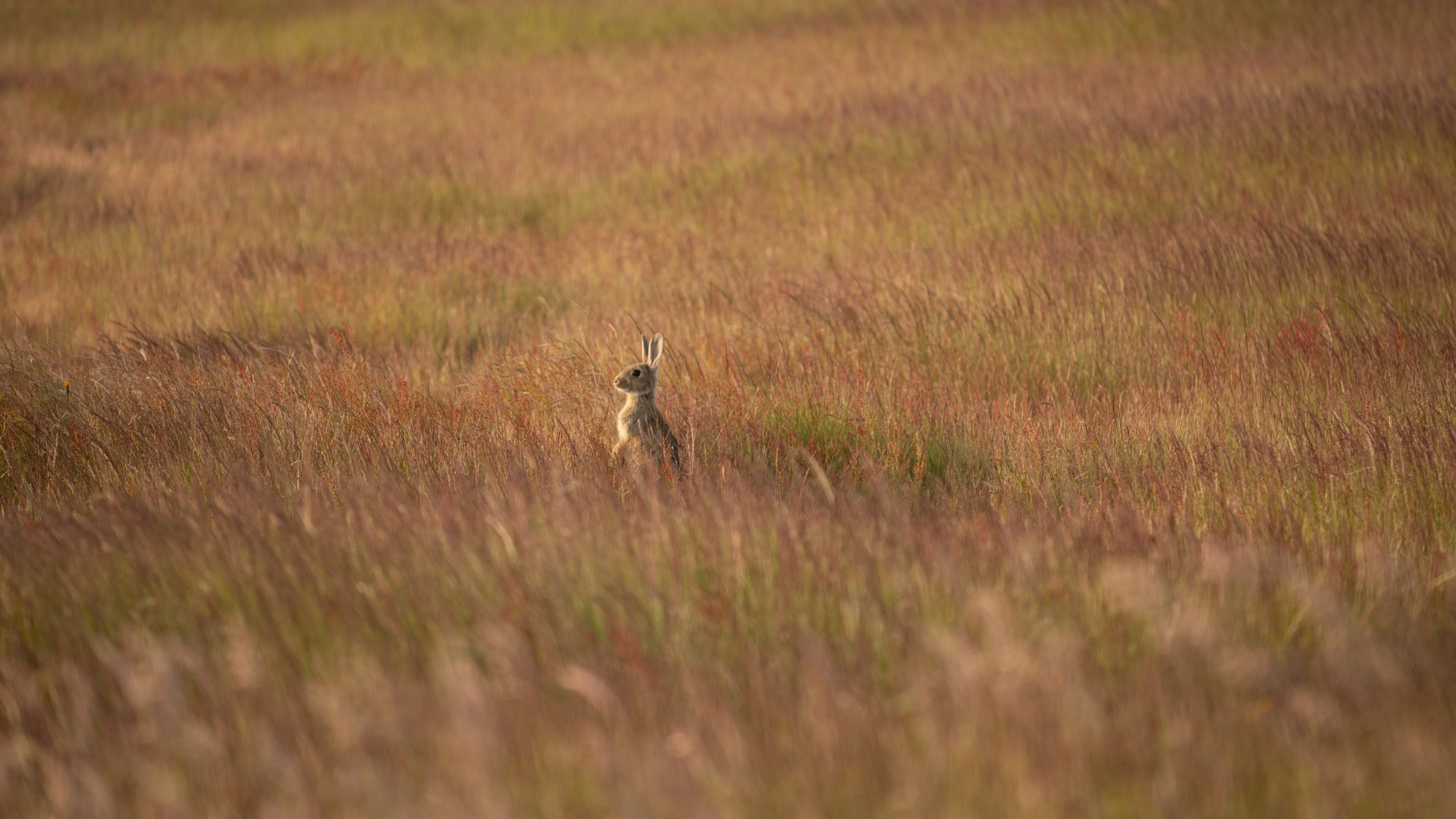
We kept our eyes peeled for those hares. On the prairie out near Robert’s Redoubt (an 1859 Pig War fortification), we spotted this beauty.
But only this one.
The foxes weren’t so easy to find, either. Not only does June grass grows lush on that plain, but shrubs form thick islands of cover. Chill winds deterred us further. The first afternoon and evening, gusts whipped the habitat and drove us to the shelter of our car. Foxes were holed up, too. We returned to our cottage with zero sightings.
The wind blew itself out by dawn, so we greeted the rising sun on Pickett’s Lane, smack in the heart of fox territory. But, though we hiked permitted paths near usual whelping grounds, sat still as stones near game trails, and drove the southern end of the island as if casing for a heist, we only saw one scraggly adult, who quickly melted into the grass. Her den could have been fifteen feet away and we’d have missed it.
Probably did.
By mid-morning, we’d still seen no foxes. Our thoughts turned to consolation, so we stopped at the bakery for cinnamon rolls, where a local told us our prime viewing window had closed until dinnertime or later.
Patience, Cheryl, I told myself. You’ll see them early or late in the day. You knew that before you left home.
Eagerness is a tough beast to tame, but meets its match in nature’s routines. There are seasons and times for every purpose, and it doesn’t pay to buck them. (Try planting basil seeds in a PNW April!) I checked my watch and shifted my attention to the wonderful man beside me, who aimed the car toward our base camp cottage. Time to kick back for a while, to enjoy him and the sunshine.
We rounded the barn to a farrier and our hostess, who looked up from a palomino being shod. “You two were up early.”
I tapped my camera. “Hunting foxes. They’re out there somewhere.”
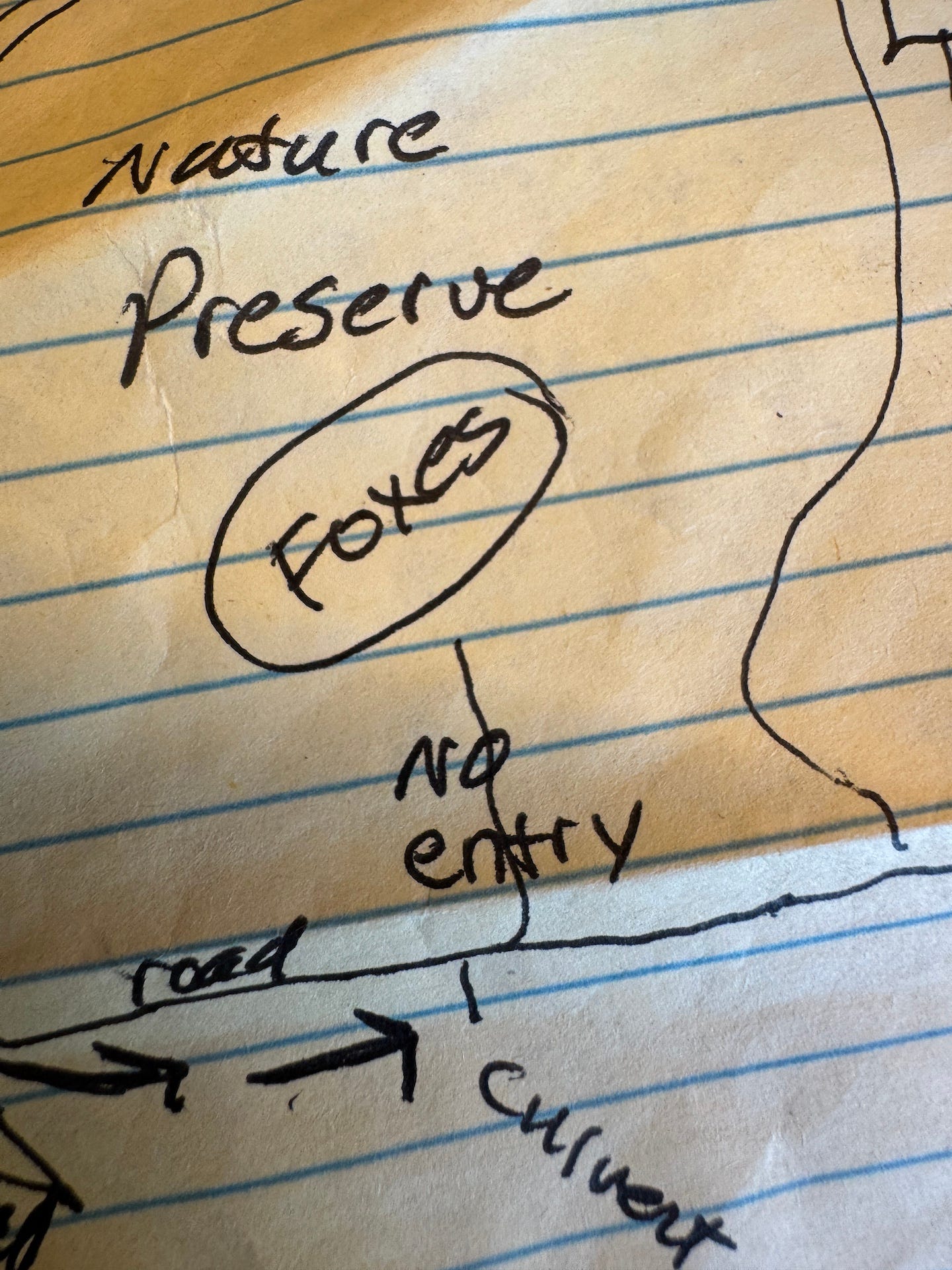
She nodded, then waved to a path threading boulders toward the sea. “There’s a den down that trail,” she said. “Not in the park, though. It’s near a private nature preserve.”
So much for kicking back. Blake studied antsy me, grabbed the book he was reading, and waved me on. I grinned. “Be right back.” With a little reconnaissance, I’d find the den. Stake out the evening’s photo shoot. Within seconds, I was down that trail.
But, though I hunted for an hour, I couldn’t find that den for the life of me.
Good thing. I returned to a hand-sketched map from our hostess tucked under a windshield wiper on our car . . . and to her note:
“The woman who lives on that preserve can be unpredictable. If you enter that gate of hers, you will not be prepared for her wrath. She may even have a gun.”