

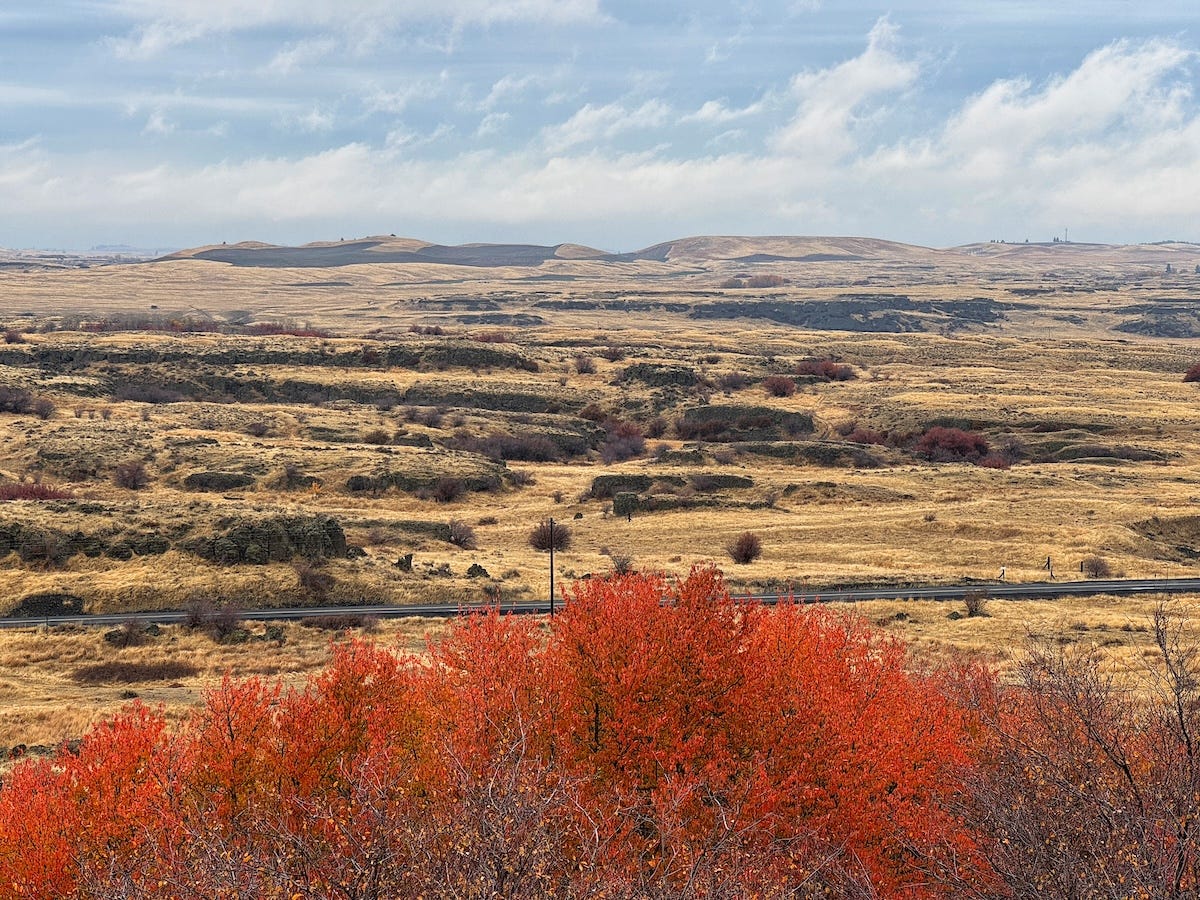
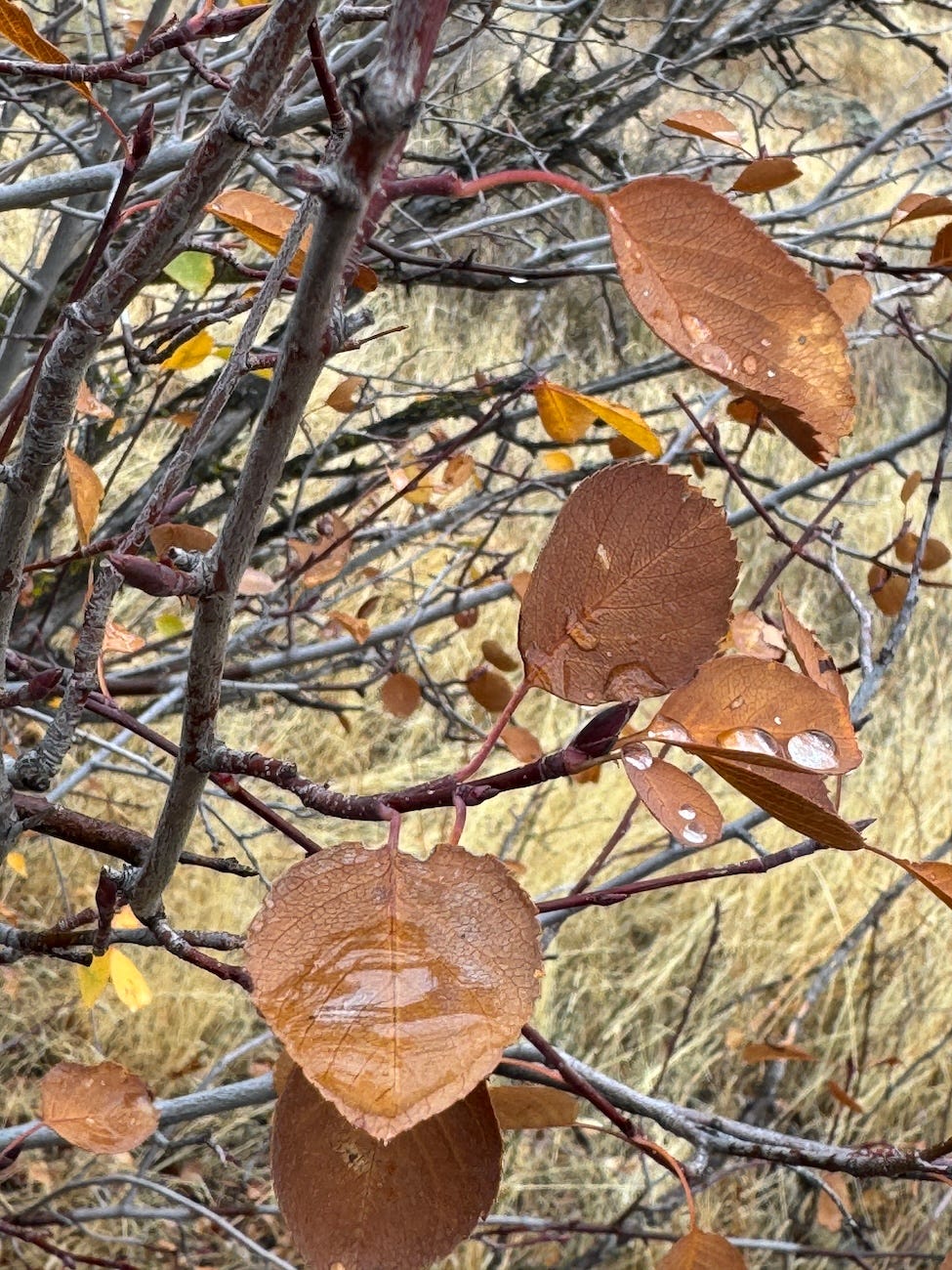
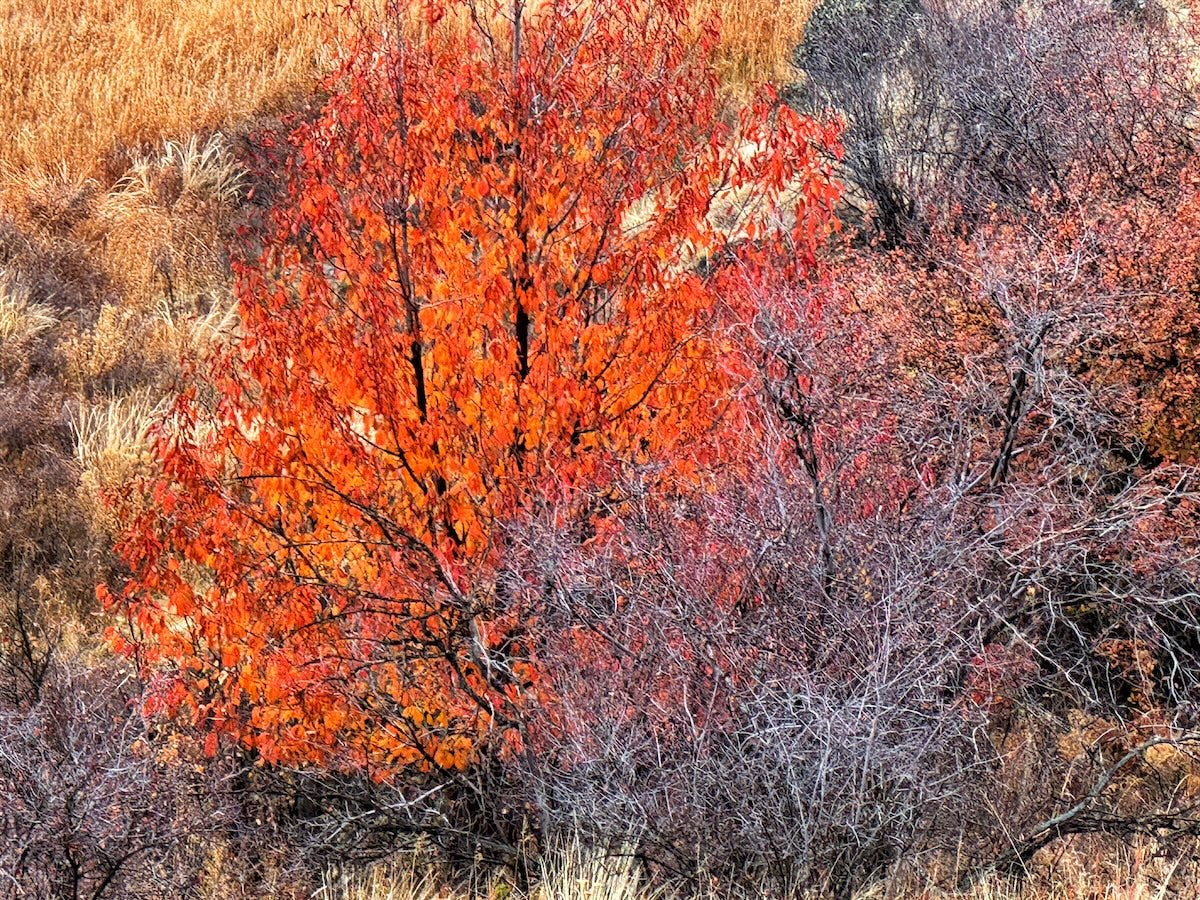
From our truck, it’s just rock, gray and fractured, in knobs and ridges that shoulder up from summer’s parched grass. These are eastern Washington’s Channeled Scablands, where storms move fast this time of year, stripping the basalt region’s blazing hawthorns and aspens to bones.
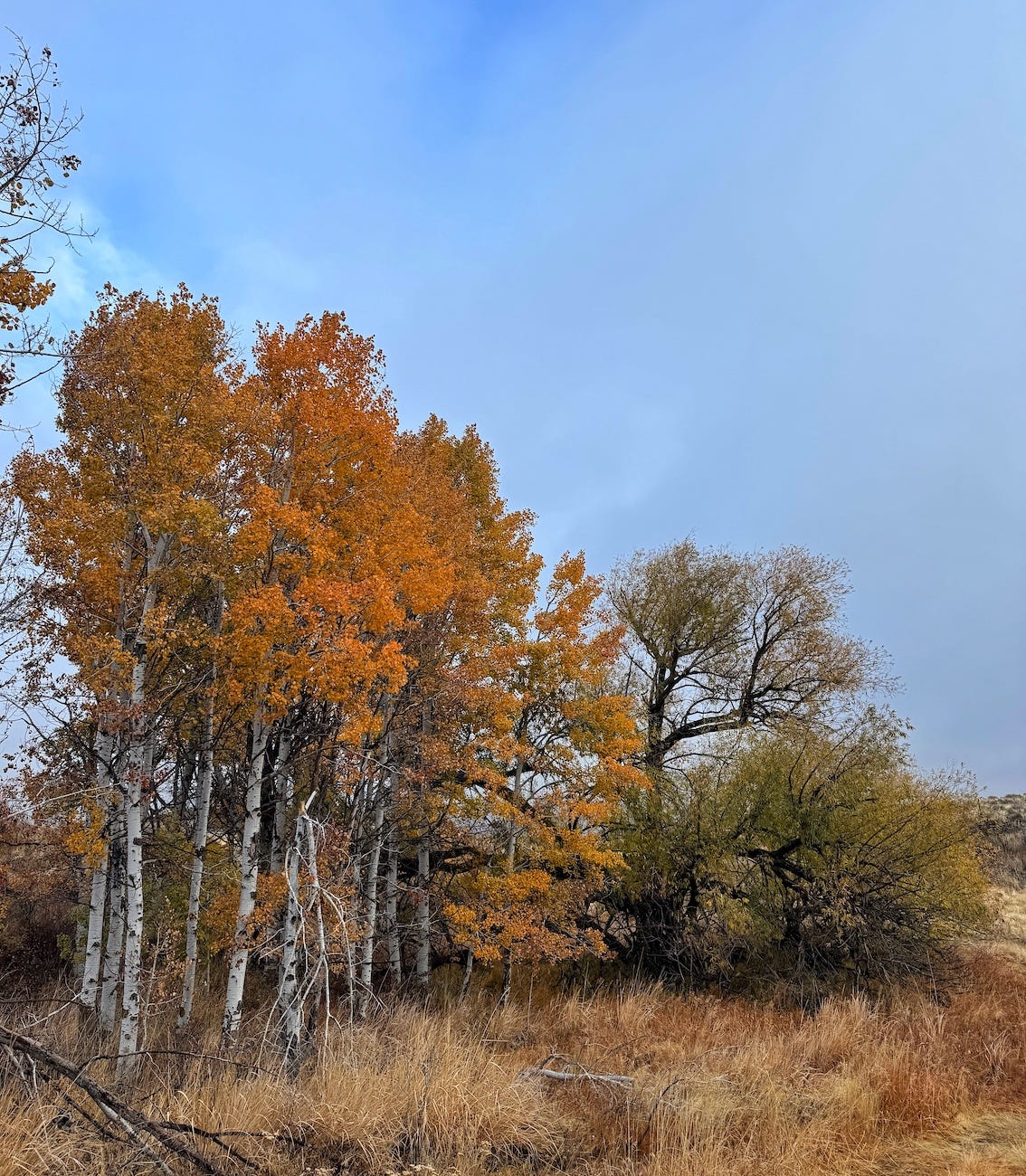
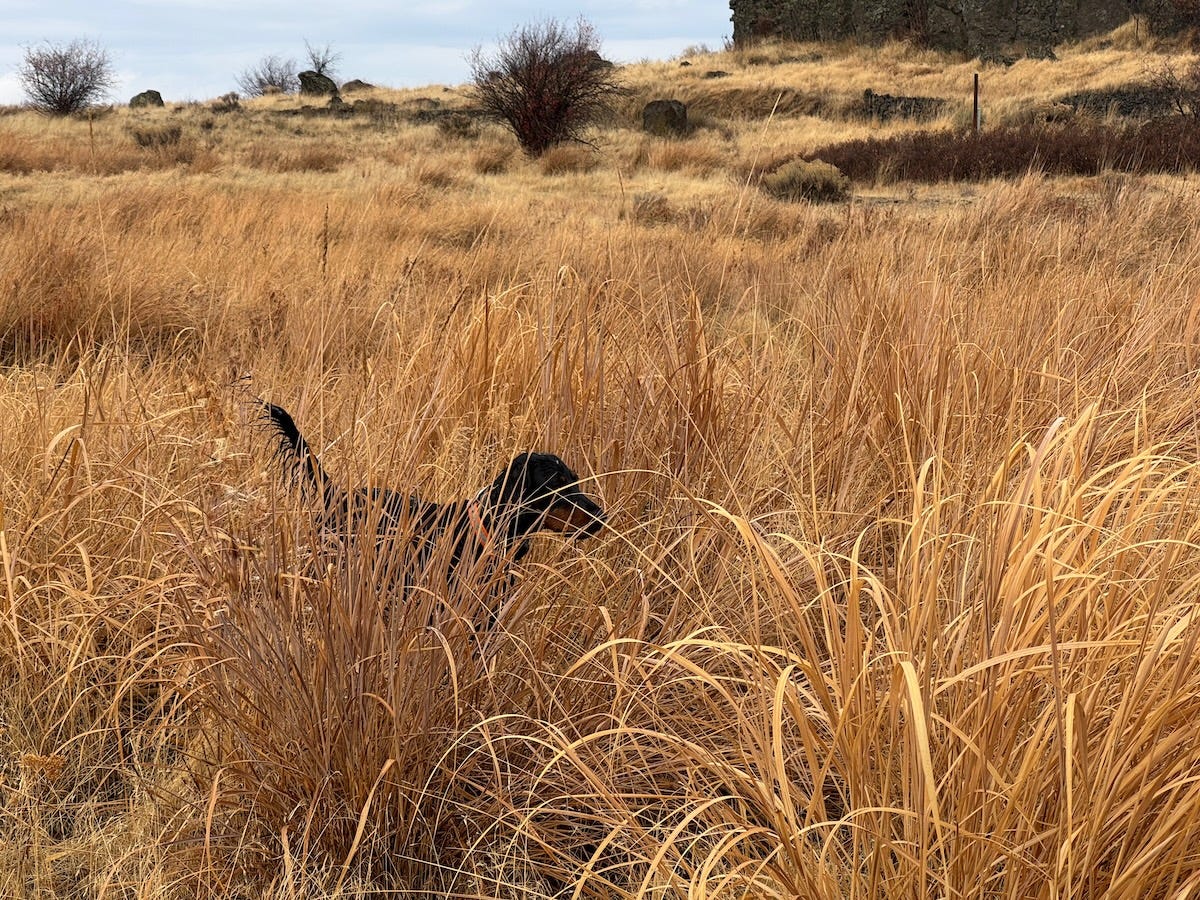
Blake and I drove deep into this country last week so the Dooz, our young setter, could work pheasants. The rain was cold, but with the sunbursts and skittering clouds that draw us time and again to this land—Blake to hunt birds with Doozy, and me to hunt stories with my camera.
I hiked first on the ridgetops, where I could take in thousands of acres at once—like geologist J Harlen Bretz did in the 1920s. He stood on outcrops like these to hunt the story of a giant flood that had carved the land. Most of his colleagues scoffed. Decades later, aerial photographs proved him right.
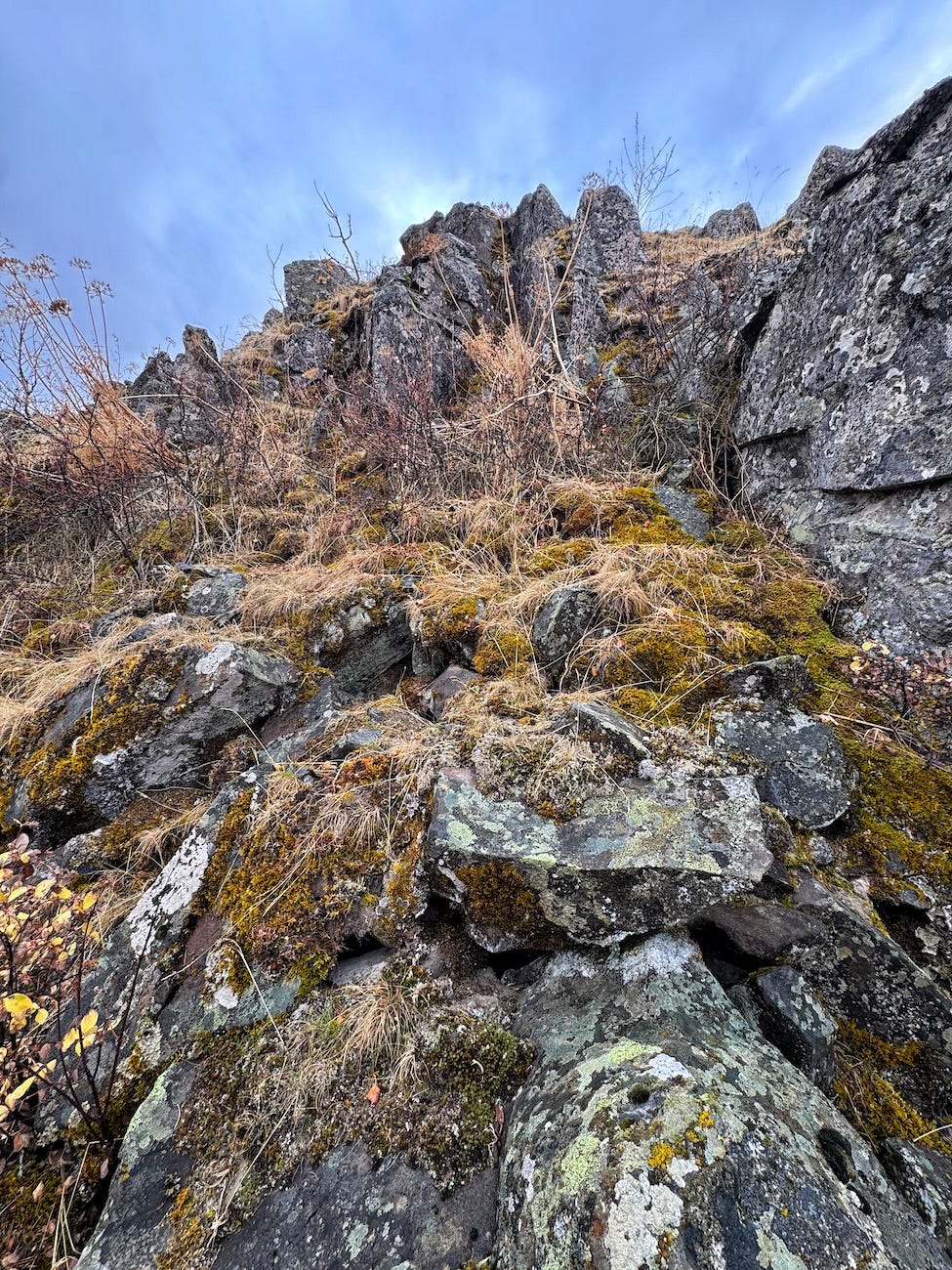
No surprise, that later proof. The greater the distance, the better the overview.
That’s true of novel-writing, too. As a writer, especially of historical fiction, I want an overview to frame my story.
But the rest of the tale? I learn the details up close, on my knees.
Same as I do on these hikes.
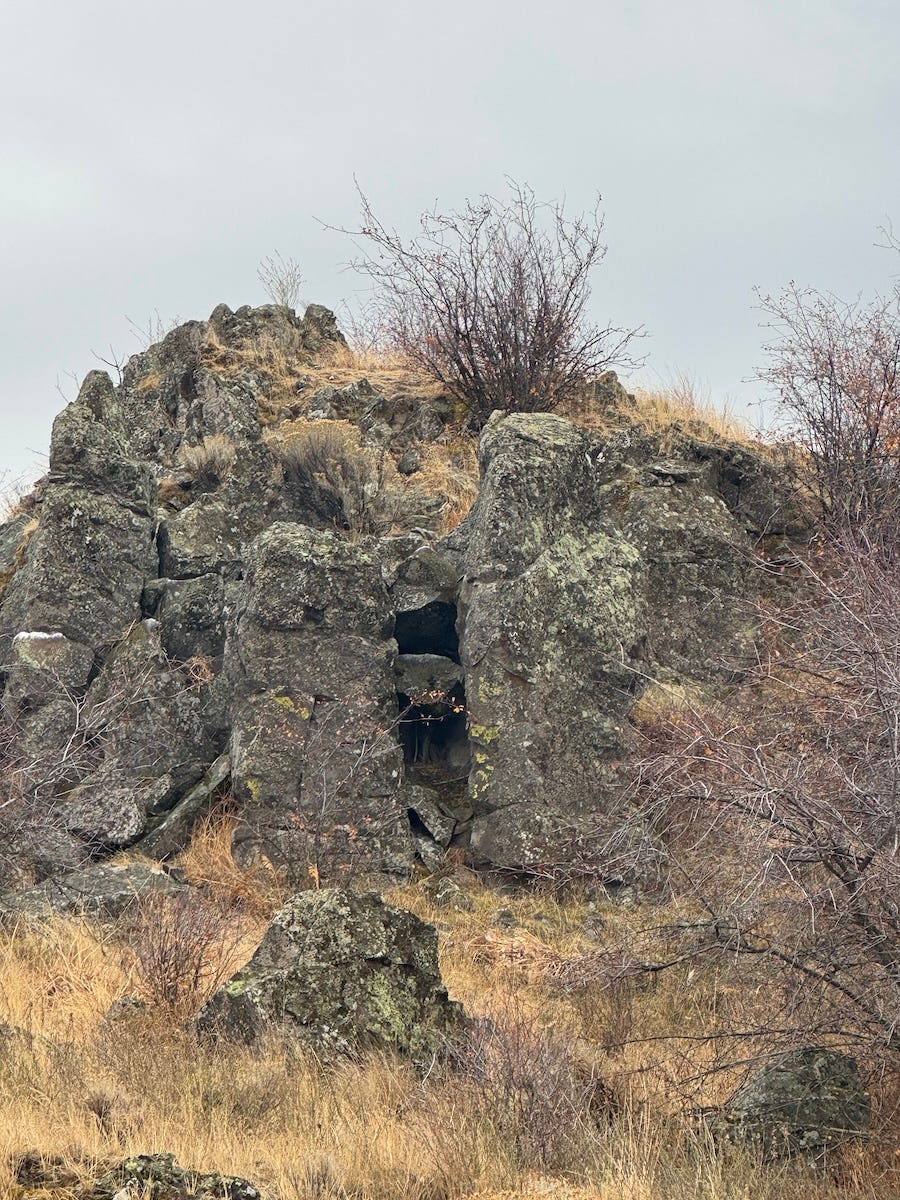
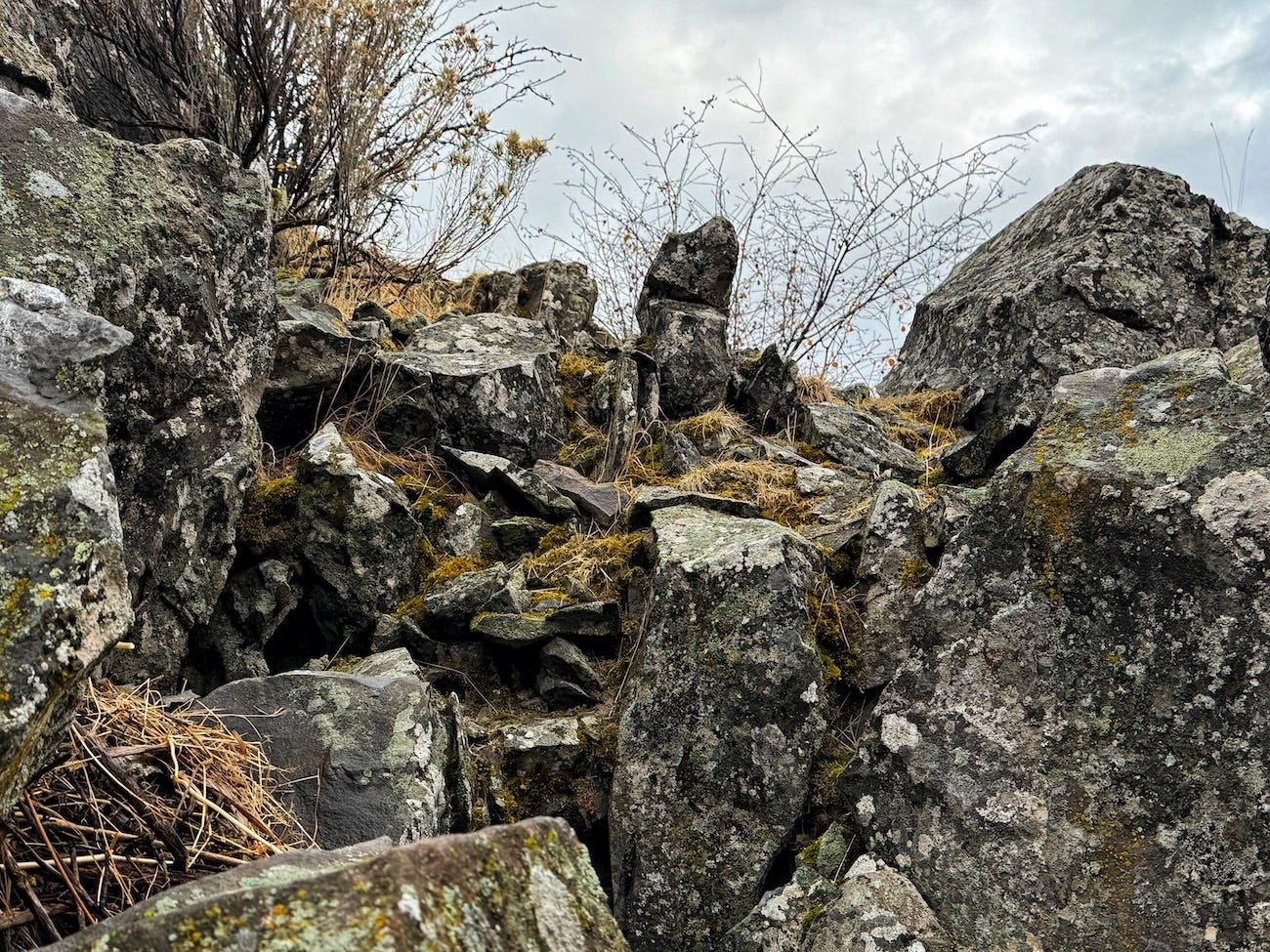
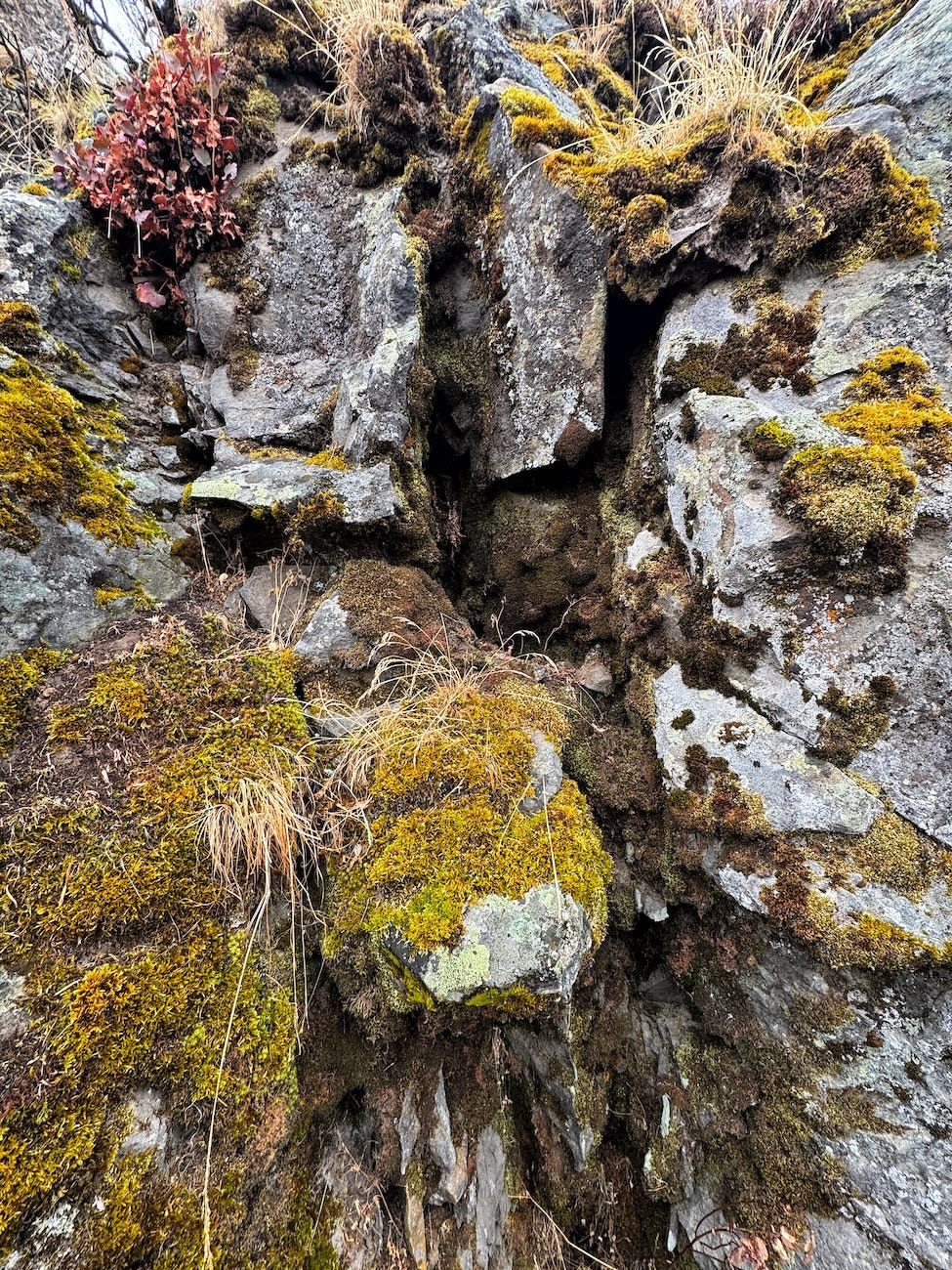
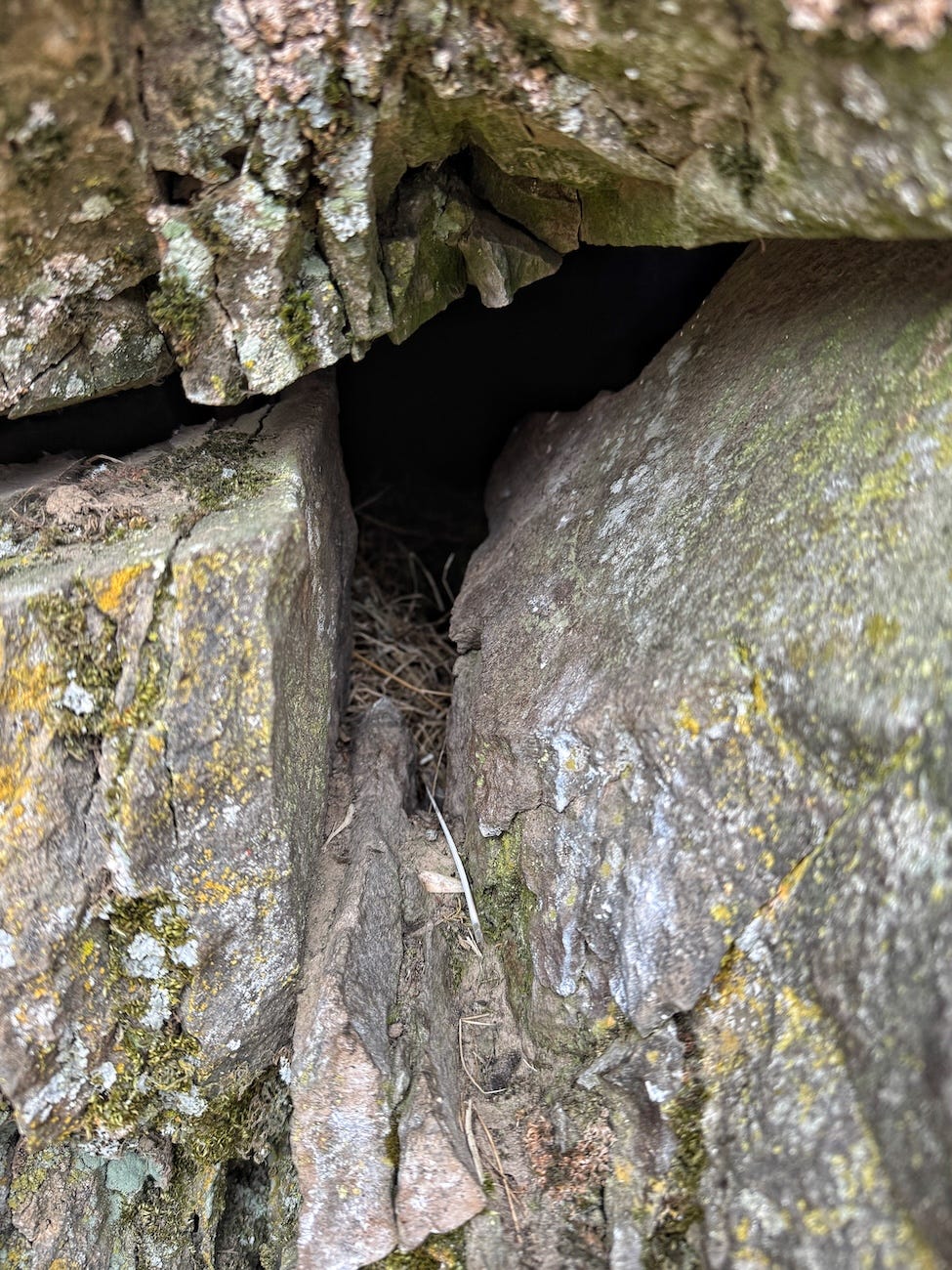
Walk nearer to that dark doorway, and it opens into this—a corridor of stacked stone, splashed with yellow lichen, its floor bedded with grass and sticks. Someone lives here, in the broken places. Or did.
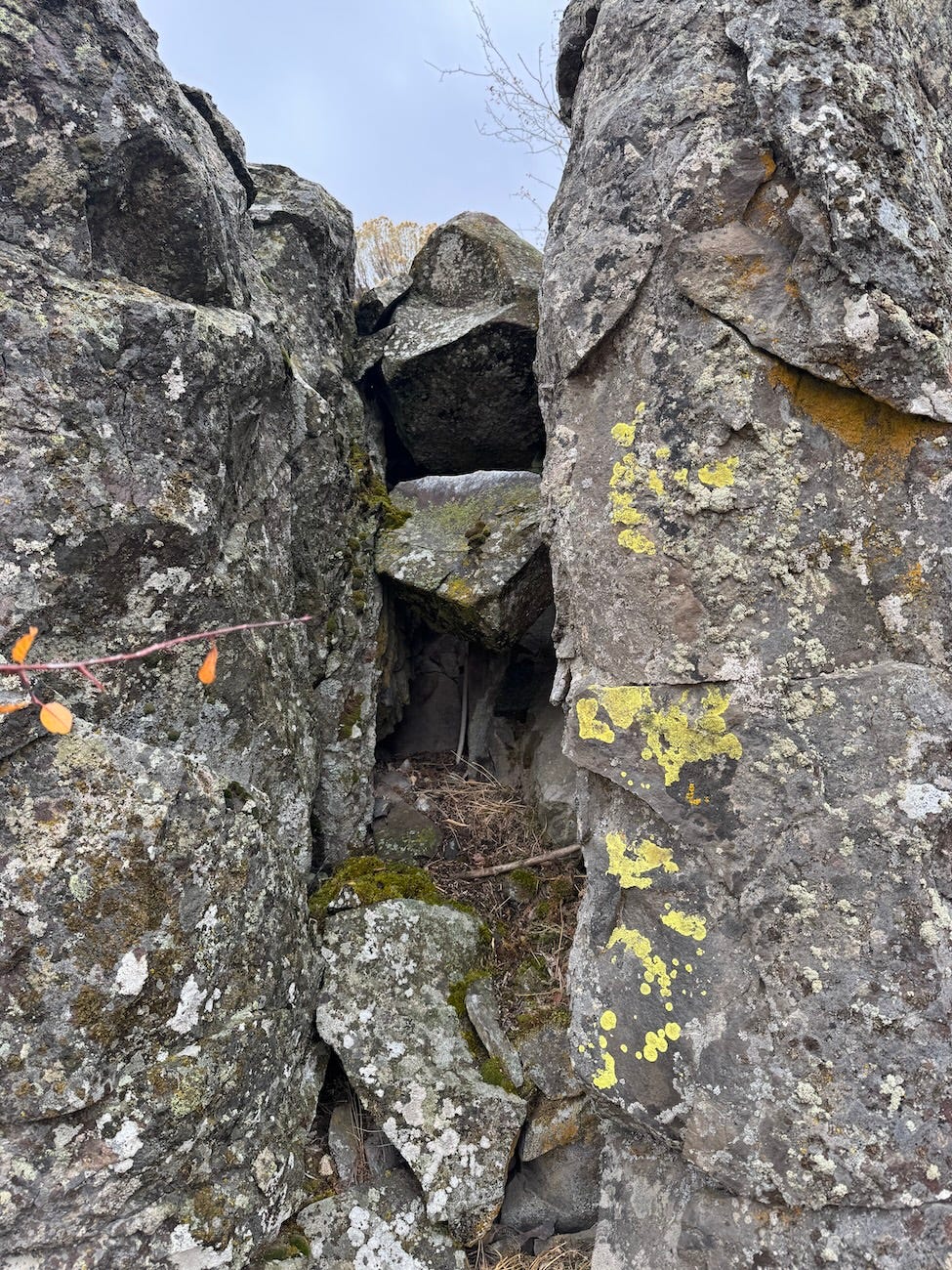
The basalt out here cracked as it cooled into loosely bound columns. Floodwaters pried those seams wider, and small creatures moved into the breaks. Once I knew to look, I saw little homes everywhere. Grass tucked under a ledge. A feather at the mouth of a crack. Nests wedged into a seams I’d have walked right past, had white streaks of guano and urine not marked them like mailboxes.
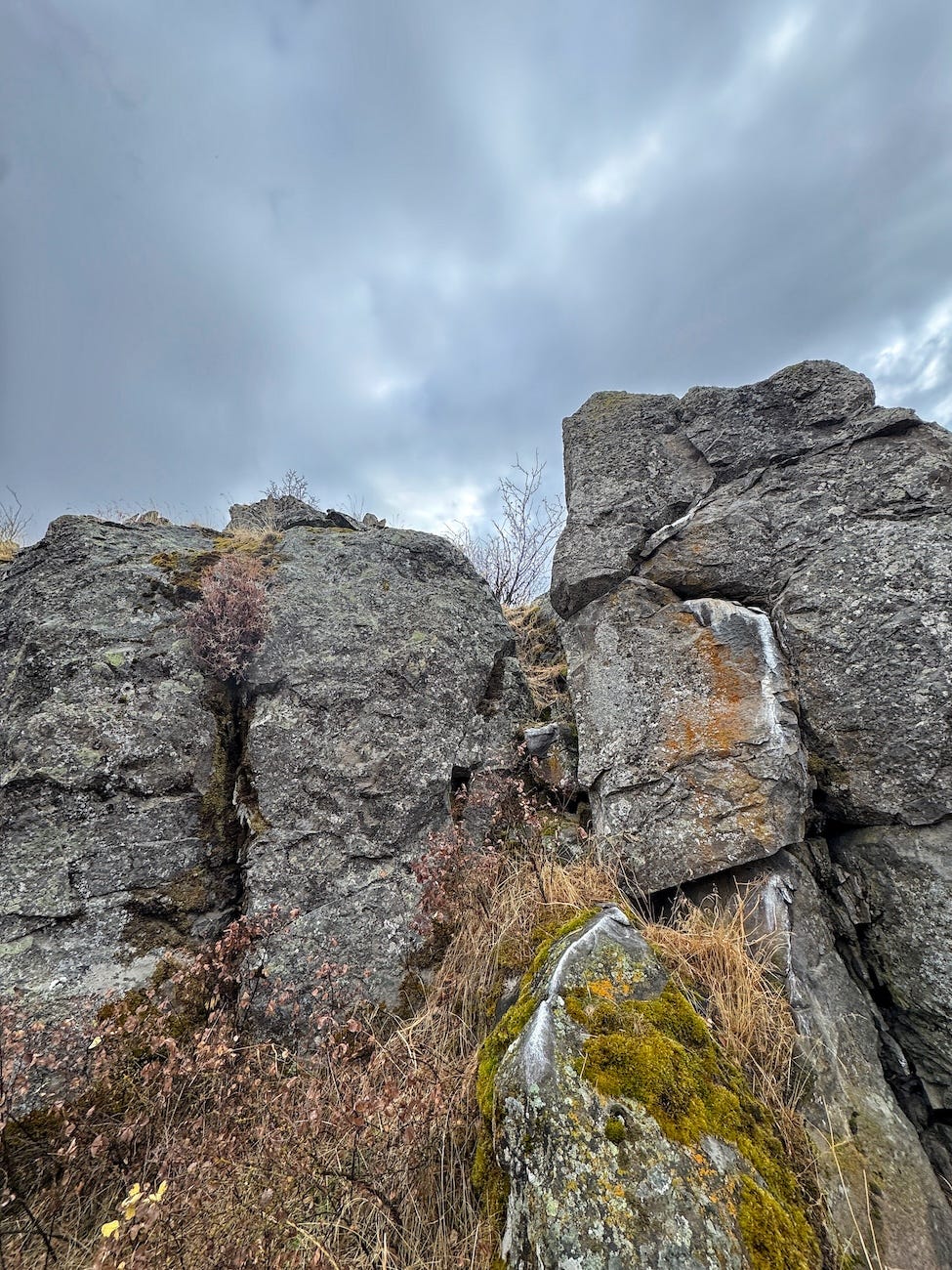
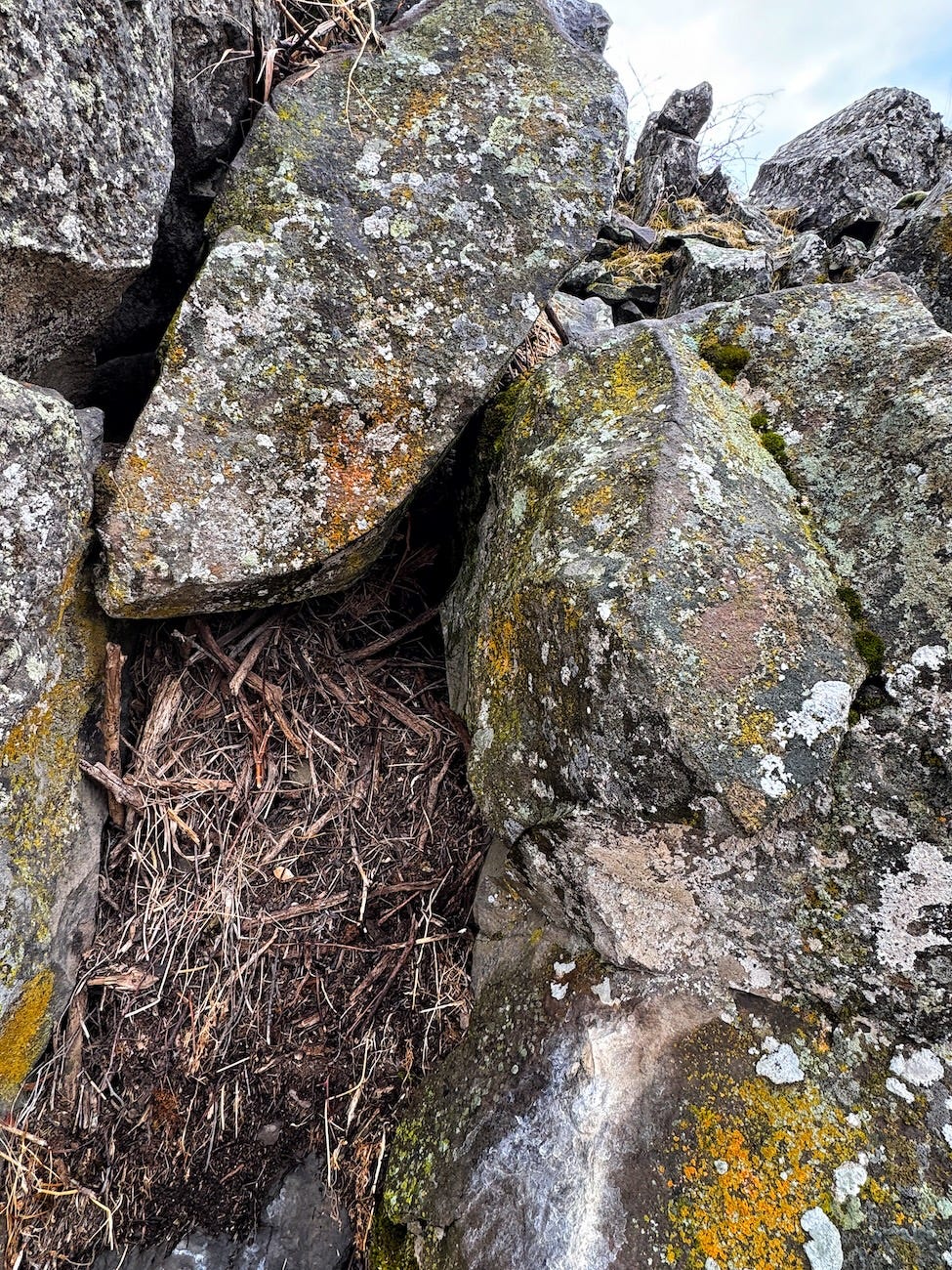
Marmots and packrats. Raptors and snakes. Squirrels and gophers and badgers, to name a few. All of them hiding or sleeping or flown off, for now.
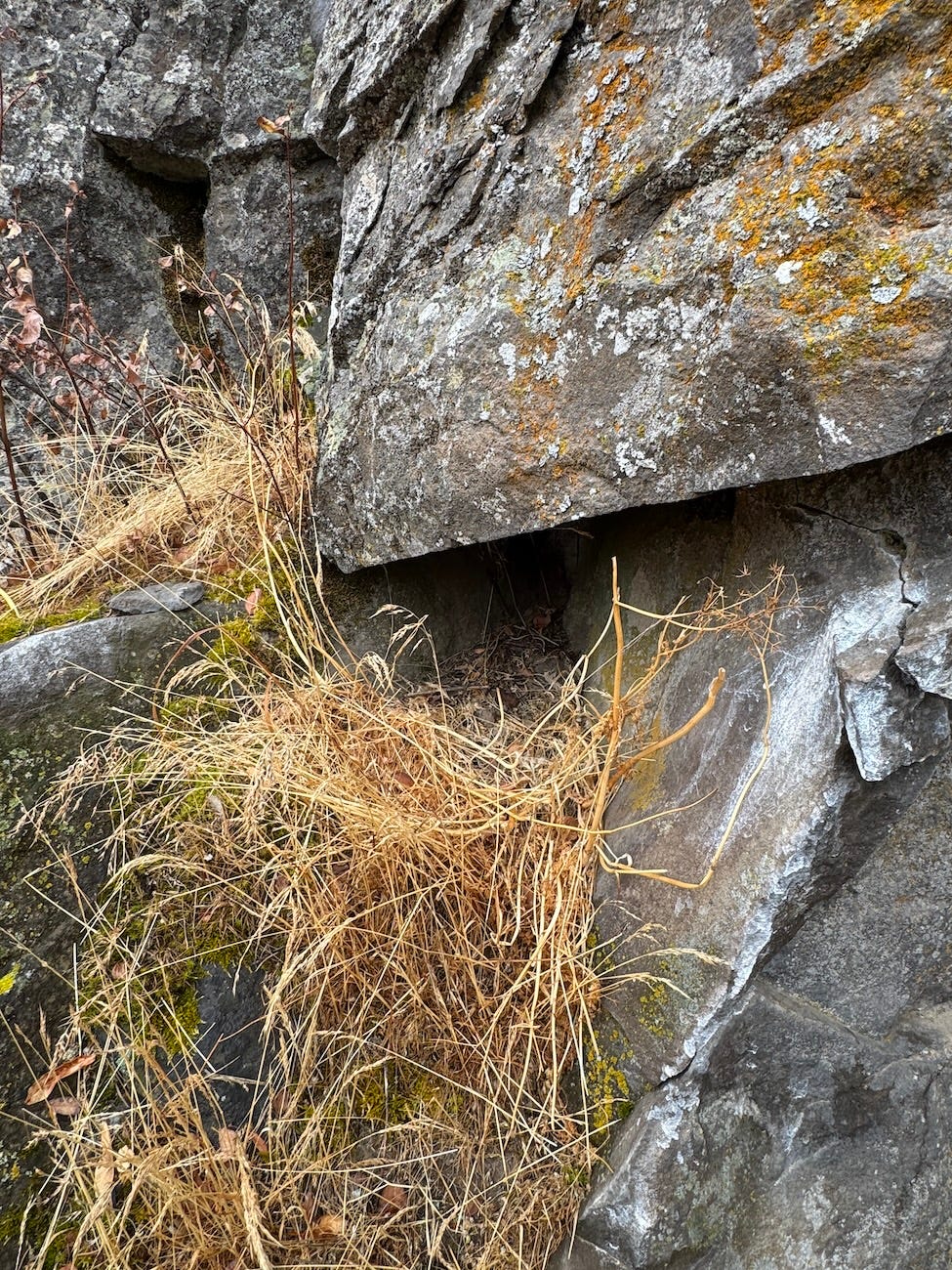
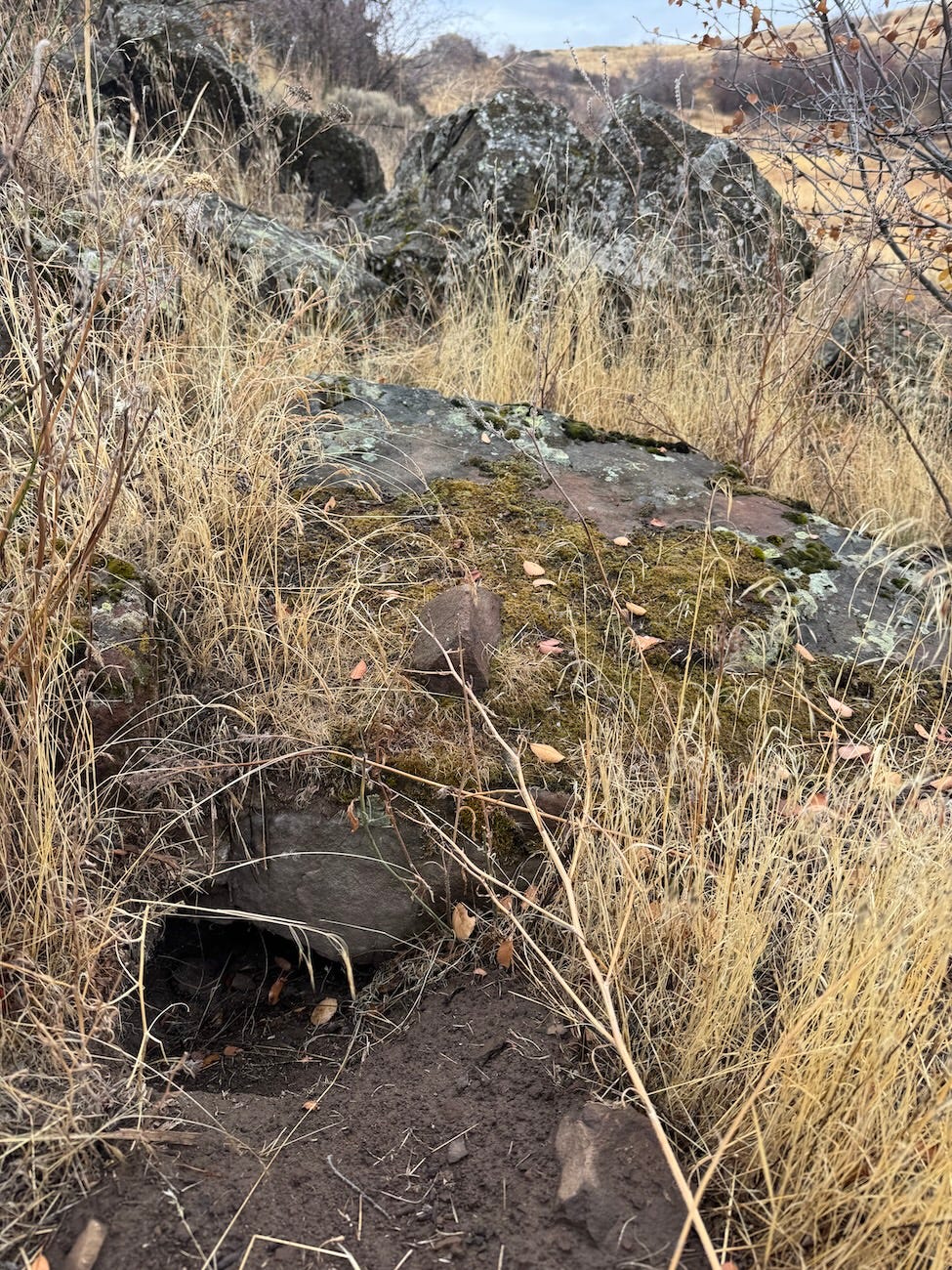
Around those nests, lichen in mint and mustard and charcoal, patch against patch, edge against edge, like maps of those rocky neighborhoods.
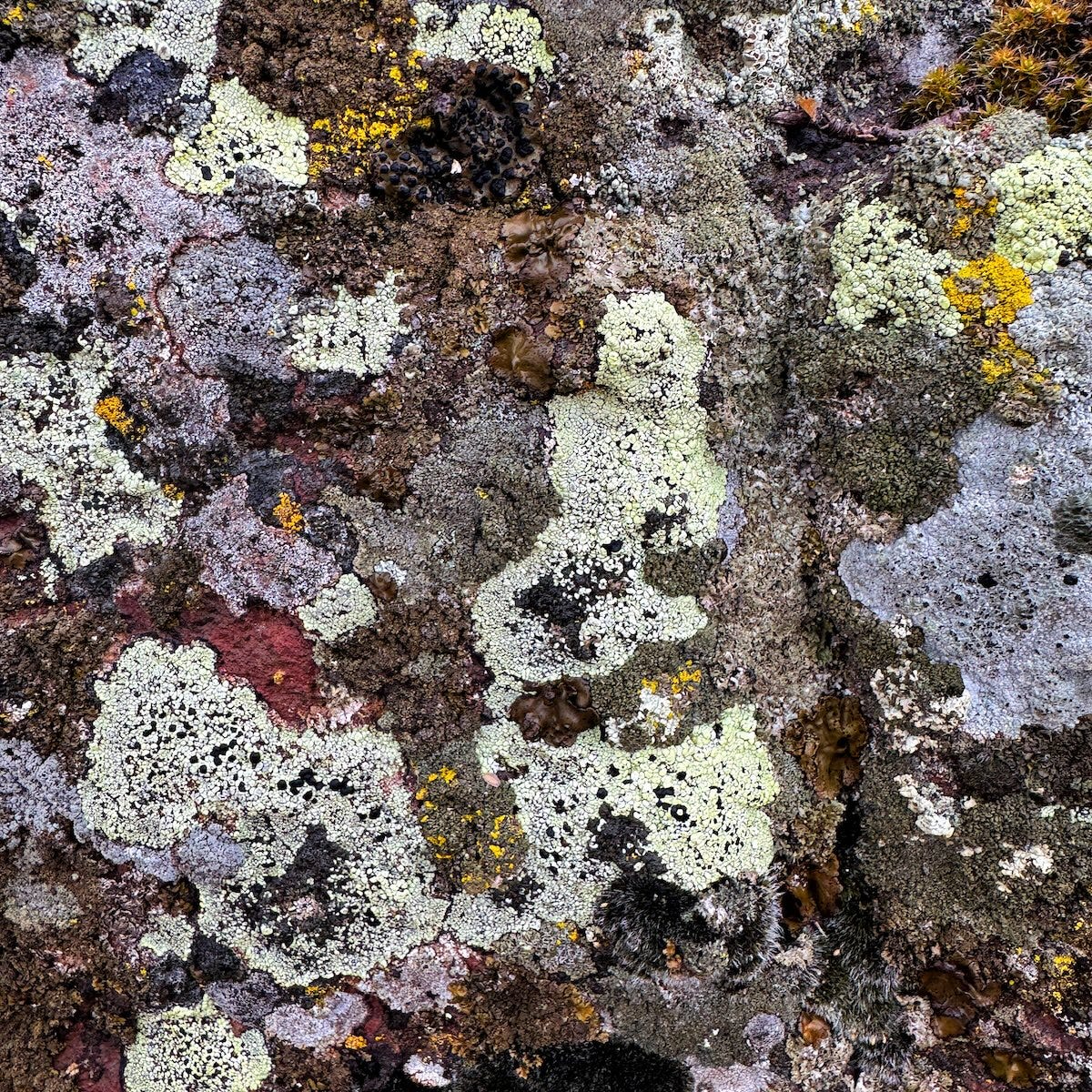
Or, for this novelist, like maps of my characters’ lives, pieced into history.
For the 1919 Pacific Northwest historical novel I’m writing now, a flood of events shaped the stage: aftermaths of World War I and the Spanish flu. Plunders of forests and birds, wild mammals and salmon. Rampant racism and temperance and crude, inhumane medical responses to disability, mental illness, and disease. And, on Alaskan islands everywhere, fur farms.
For all their natural abundance, the Washington and Alaska of that era were fierce and inhospitable places, where people built lives in the cracks.
It’s those lives I love to write about. And some of them were oh, so beautiful.
***
Next, from my Bookery . . .
Congratulations, Joan!
Joan Cook, you’re the winner of last month’s giveaway of Sara Brunsvold’s The Atlas of Untold Stories!
Reply with your mailing address, and I’ll send the book right off to you.
This Month’s Giveaway ends TOMORROW NIGHT (and it’s why I’m writing you early).
Here’s the gist:
No Tricks, Just Books
Thirty-six of us authors have teamed up for one HUGE giveaway,
Grand Prize: one winner receives all 36 featured titles.
36 more winners will each receive one of the featured titles.

Open to U.S. residents 18 and older. Ends October 31 at 11:59 p.m. Central (9:59 p.m. Pacific). Book format is each author’s choice. Entering signs you up for the participating authors’ newsletters; you can unsubscribe anytime.
No tricks, no boos. Just books.
Write me about your adventures, friends? Even if they’re in your backyard, I’d love to hear.
Love,
Cheryl
I’ll be anxiously awaiting your next book. But What the River Keeps set the bar, oh, so high!!
May we thrive in those cracks and broken places. Thanks for a lovely photo essay and reflection.